Meditation For Children and Teens
When we meditate, we inject far-reaching and long-lasting benefits into our lives: We lower our stress levels, we get to know our pain, we connect better, we improve our focus, and we’re kinder to ourselves. Let us walk you through the basics in our new mindful meditation guide.
Meditation to channel energy.
Undoubtedly, positivity is abundant in children; but left to itself, it can become destructive. Parents struggle to channel their innate energy and talent purposefully and productively so kids pursue worthier goals than giving lip. One of the most seamless and tested ways of doing this is meditation.
Whether you are trying to help your fidgety eight-year-old child to sit down and focus or attempting to counsel your moody teenager to communicate respectfully, meditation can be that facilitating factor that bridges the generation gap that inevitably develops between parent and child. Several research-backed benefits of meditation can help you tame your child’s (adorable!) wildness, smooth their rough edges, and lend them grace and charm that age may or may not teach them.
Benefits of Meditation for your kids
With meditation, the masked innate nature of your child comes out. And this innate nature is pure and beautiful. And brings joy. In this space, children are relaxed, calm, and energized. Meditation lends focus to the restless child, sensitizes the careless child, composes the nervous child, and softens the aggressive child. So, it naturally follows that parents should take advantage of this simple tool for their children, especially teenagers, who are naturally moody and restless.
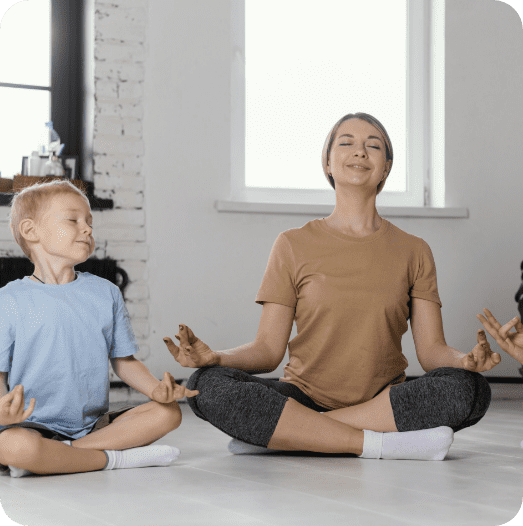
Meditation Techniques for Kids
Observe your breath as if it was your best friend
The best way to start meditation for your children is to ask them to close their eyes and breathe in and out slowly. And just observe the breath for 2-3 minutes. Have them say ‘Hello’ and ‘Bye’ to their breath as they inhale and exhale, respectively.
Breathe your way into meditation with pranayamas.
After a good physical session outdoors, children usually come home tired. Sometimes, they are upset because they disagree with their friends, or they are moody because, well, kids are kids! At this time, give them your full attention.
Begin your day with a simple mantra for meditation.
Children normally need some instructions. While their myriad thoughts are swift and varied, they generally don’t enjoy spending time alone, especially those under 10. You might discover that even the quiet ones dislike closing their eyes and sitting alone. It might even scare them. In such a scenario, giving them the security and support of a mantra would be a good idea.
Chant Sanskrit shlokas to ground children
How often have you caught yourself looking wondrously at your child, admiring the energy, quickness, and dexterity before you? The pure, raw talent is awe-inspiring. One moment later, you make the inevitable ‘mistake’ of blinking your eyes. And ironically, those very same qualities drive you up the wall. Because, like it or not, children occasionally put their natural talents towards less-admirable ends – talking back, fibbing, and giving excuses, to name a few of their milder transgressions.
20-20-20: Quick eye exercise
Staring at the screen for long hours can be tiresome and tiring for anyone. Ask your children to do this simple 1-minute exercise to relax their eyes. After every 20 minutes, they must look at a point 20 feet away and blink for 20 seconds.
Meditation to channel energy.
Undoubtedly, positivity is abundant in children; but left to itself, it can become destructive. Parents struggle to channel their innate energy and talent purposefully and productively so kids pursue worthier goals than giving lip. One of the most seamless and tested ways of doing this is meditation.
Whether you are trying to help your fidgety eight-year-old child to sit down and focus or attempting to counsel your moody teenager to communicate respectfully, meditation can be that facilitating factor that bridges the generation gap that inevitably develops between parent and child over time.
Use of meditation for your kids
With meditation, the masked innate nature of your child comes out. And this innate nature is pure and beautiful. And brings joy. In this space, children are relaxed, calm, and energized. Meditation lends focus to the restless child, sensitizes the careless child, composes the nervous child, and softens the aggressive child.
So, it naturally follows that parents should take advantage of this simple tool for their children, especially teenagers, who are naturally moody and restless.
Perhaps the burning question in your mind is, “How do I get my child/teen to meditate? He/she doesn’t want to.” So, we have developed some simple techniques to help you broach the Big ‘M’ with your kid(s). You might find some of the tips we have mentioned useful as well. Since children can mean the younger 8 to 12-year age group and the maturer 13 to 18-year teenagers, we have suggested a few variations for each group with each technique.
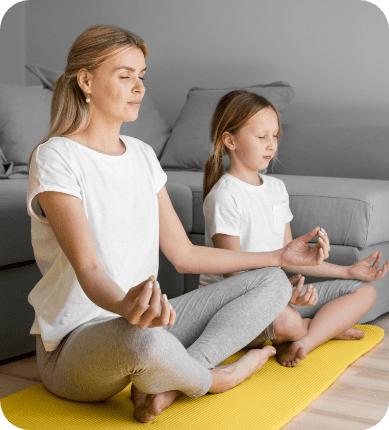
Short meditation techniques for Kids
- Observe your breath as if it was your best friend.
The best way to start meditation for your children is to ask them to close their eyes and breathe in and out slowly. And just observe the breath for 2-3 minutes. Have them say ‘Hello’ and ‘Bye’ to their breath as they inhale and exhale, respectively.
- Relax your facial muscles exposed to long screen hours.
Increased screen time for children has made Sukshma Yoga, a simple yoga technique for relieving tense facial muscles, necessary. How often do we pay attention to those indispensable sense organs that work day in and day out for us? No better time than now to exercise the eyes, eyebrows, ears, mouth, chin, and cheeks. It can be the warm-up exercise required to energize children before classes.
- Breathe your way into meditation with pranayamas.
After a good physical session outdoors, children usually come home tired. Sometimes, they are upset because they disagree with their friends, or they are moody because, well, kids are kids! At this time, give them your full attention. Ask them to wash up and sit down with you. Ask them to close their eyes and take deep breaths to help them overcome their feelings of conflict and exhaustion.
Once you have ensured they are stationary, ask them to do the Bhramari Pranayama. This is a fun breathing technique where they sound like a bee buzzing.
Pro tip: Ask your child to meditate after some physical exercise
Children must engage in physical exercise. Encourage them to play sports or do yoga asanas. This will help them utilize their physical energy and make them less restless. You will find them ready and willing to listen to sit in one place when they are tired.
Note: These pranayamas are as good as meditation for the 8 to 12-year-old age group. Ask them to do it for 5 minutes in all. For 13 to 18-year-olds, you can ask them to sit quietly for 5-10 minutes with their eyes closed with a quiet sense of awareness of their breath.
- Chant Sanskrit shlokas to ground children
Children are greatly influenced by their environment – TV shows, friends, and peers. All these and their age help them set up residence in an imaginary world that is sometimes far removed from reality. Sometimes, this is a defense mechanism to help them live in their reality (a reality they do not like) without being touched by it.
- Glide into Aura Guided Meditation
How do you get rid of tension effortlessly and fill yourself with energy? Ask your kid to simply sit, and then let Gurudev’s soothing and friendly voice guide your child easily and lightly through the aura-guided meditation. The best thing is that there is no effort. Children come out of this feeling refreshed and in harmony with their breath.
- Participate in group meditations/Satsangs
Children, especially teens, tend to ape their friends. So, the best way to get your child to meditate is in groups.
For 8 to 12-year-olds, try 30-minute play sessions with 10 minutes dedicated to meditation. You will first hear a few giggles and spy peeks, but once children realize that some of their friends are sincerely trying to meditate, they will feel inspired to do the same. And being creatures of habit, doing it regularly will make this practice a part of their daily routine.
- Ease into Yoga Nidra guided meditation.
children are so tired after their playtime that they won’t co-operate even to sit upright. In such a case, what if they could lie down and meditate? Many kids find this easier to do as it is relaxing and effortless. So, the best meditation for kids when they resist sitting upright is the Yoga Nidra meditation. Even if they fall asleep, it is all right. They can continue meditating once they have had enough rest.
Simple 5 Minutes Meditation Techniques for Kids:
- With eyes closed, ask them to take a deep breath and chant Om loudly as they release their breath simultaneously.
- Young children love a good challenge. Simple Surya Namaskars (Sun Salutation Pose) is just perfect for them. They could start with six rounds and gradually increase it to 12, 18, etc. Ask them to lie down for 5-10 minutes after that.
- Jumping is part of children’s daily movements. Ask them to do some jumping and hopping exercises, then FREEZE! And then, sit still for two minutes.
- Take them out into nature, and ask them to gaze at the sky or the greenery around them in quiet reflection.
- Special short meditation techniques for teenagers (13 to 18-year-olds):
Ram Dhyan guided meditation.
This is another innovative guided meditation that can help your child meditate. In Sanskrit, Ra means light, ma means me, so Rama means the light within me. This meditation uses the word ‘Ram’ sound to move effortlessly from noise to silence. This simple meditation can help children delve within themselves to connect with their inner selves.
Hari Om guided meditation.
This meditation activates the various chakras in our body. Chakras correspond to nerve centers in our body. ‘Ha’ means pain/ suffering, and ‘Ri’ means ‘remover of.’ When we chant Hari Om, we turn the flow of energy in our body, which converts negative emotions into positive emotions. So, play this guided meditation while your teenager meditates.
Transforming Emotions guided meditation
No one knows the highs of peaks, the depths of valleys, and tempestuous adolescents. They flip-flop between good and bad times, exaggerating each unrealistically. It is not their fault the age-related hormones are acting upon them as they constantly try to adjust to their expanding physical and mental selves. It is the time in their life when they reach the crossroads of their academia, their emotions confuse them, and their bodies undergo enormous changes.
Gurudev’s guided meditation can help them transform their extreme emotions, taking them to a stable and positive space surrounded by tranquility.
Blossom in your smile guided meditation.
Who knows better than children what a wholehearted smile is? In this guided meditation, the positive effect of your smile is used to ward off all negativity. This can be particularly useful to your perpetually misunderstood teenager struggling to carve a niche for himself/herself in the world. Follow Gurudev as he leads your child into a happy world where they blossom into responsible and caring beings that you feel proud knowing.
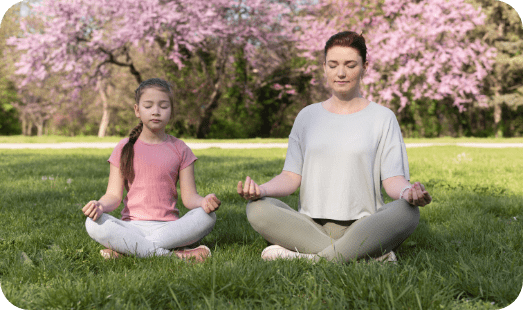
Post meditation tip
When your children are done with their meditation practice, let them engage in creative pursuits like painting.
After meditation, children can sift through the mental clutter and find their creative side. Some kids find the results spilling onto their canvas. See if yours is one of them! You won’t have to thrust it into their schedule and endlessly remind them to practice if they are. They will want to – on their own.
Another immeasurable benefit of meditation is that you will find that your interactions with them are devoid of conflict. Your communication and connection with your kids will become more vital than ever – a priceless benefit, wouldn’t you say?
How parents can help kids learn to meditate
When we meditate as adults, we often try to find a quiet corner of the house to practice daily. But research suggests that children’s behavior is often modeled after their parents, so why not allow our kids to watch and partake in meditation alongside us?
Rather than looking for a hideaway, we might explain our actions and why. Even if they struggle to sit still or close their eyes and giggle, we’re still normalizing the practice and teaching them that meditation is a positive act that benefits our health and happiness. And that’s the goal, isn’t it?
If the little ones don’t seem particularly interested in joining a guided meditation, plenty of other ways to ease kids into the practice exist. Throughout the day, parents or teachers might start to weave in short mindfulness activities for kids, such as creating a mindful bedtime ritual, eating mindfully, practicing deep breathing, or encouraging them to tune in to their senses during a family walk.
While these exercises may not all involve kids sitting still, closing their eyes, and emptying their minds, they will help them understand how to be more present. Once familiar with how to do that, they may have an easier time stepping into a guided meditation, even if it’s just a short 1- or 5-minute practice.
But it’s important not to feel we must force these techniques upon them. Some kids will naturally respond to specific approaches better than others, so have fun exploring them together.
Try 11 meditations for kids and families.
Looking for easy guided meditation for kids? We created Headspace for Kids in the Headspace app to help children be healthy and happy, not just for now, but for the rest of their lives. Subscribers can access several mindfulness activities made just for children, including:
- Calm – ages 3-5, 6-8, and 9-12. This simple, fun breathing exercise teaches your child the fundamentals of meditation.
- Cool Off – ages 3-5, 6-8, and 9-12. Use this exercise to help melt away any uneasy feelings, whether it's anger or frustration.
- Good Morning – ages 3-5, 6-8, and 9-12. This quick morning meditation for kids will help you and your child start the day off right.
- Rest & Relax – ages 3-5, 6-8, and 9-12. In this exercise, kids learn to recognize calmness and be less reactive.
- Kindness – ages 3-5, 6-8, and 9-12. A visualization exercise that will teach your child about openness and generosity.
- Appreciation – ages 3-5, 6-8, and 9-12. A visualization to help kids get in touch with a feeling of gratitude for the world around them and the people in it.
- Paying Attention – ages 3-5, 6-8, and 9-12. Kids will use their imagination to practice a relaxed, precise focus.
- Settling Down – ages 3-5, 6-8, and 9-12. Help your child focus on a light, playful attitude toward life.
- Goodnight – ages 3-5, 6-8, and 9-12. Help your little one get a good night’s rest with this relaxing mindfulness activity.
- Sleep Tight – ages 3-5, 6-8, and 9-12. When it’s time for bed, use this exercise to count to sweet dreams.
- Stay Positive – ages 6-8 and 9-12. Anxious or worried feelings arise from time to time. We will take a few minutes to step out of those thoughts and focus on the body.
Between school, screen time, and navigating all the emotions that accompany growing up, being a kid isn’t always easy. Familiarizing them with meditation can be a gentle way to help their minds stay as calm, healthy, and happy as possible — not only during adolescence but throughout the rest of their lives.
Frequently Asked Question
01 Is it good for kids to meditate?
Research on the Benefits of Meditation in Children, Several studies in school settings also show improved attention and behavior.
02 What are the powers of meditation for kids?
Meditation helps children improve their listening, problem-solving skills, deep breathing techniques, and visualization and encourages them to use positive affirmations.
03 Which Religion Teaches Dharma?
Mantra is a Sanskrit term, with “man” meaning “mind” and “tra” meaning “release.” Think of a mantra — a word or phrase you repeat during meditation — as a tool to help release your mind.
04 Which mantra is very powerful?
Om Namah Shivaya – Mantra to Remove Negative Energies
05 What is the rule of meditation?
Watch Your Breath